Skip to content
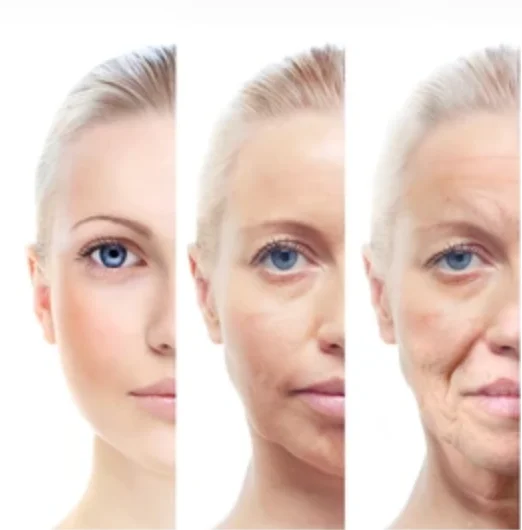
Table of Contents
Medically reviewed by: Tchad Griffin M.D., Jill Langer FNP | Last updated: September 2026
“What should I be doing for my skin right now?” is one of the most common questions we hear, and the honest answer is that it depends less on your birthday and more on what’s actually happening underneath your skin at each life stage. Here’s what the research says about how skin changes through your 40s, 50s, and 60s, and which non-surgical options tend to make the most sense at each stage.
Quick answer: Skin aging isn’t a steady, linear slope, it’s driven by measurable biological changes that pick up speed at specific points, particularly around menopause and in two documented “waves” occurring on average around ages 44 and 60. In your 40s, treatment usually focuses on prevention and early correction (neuromodulators, light resurfacing, early volume replacement). In your 50s, skin tightening and more targeted volume restoration tend to move to the forefront as hormonal changes accelerate collagen loss. In your 60s, the focus often shifts to rebuilding structural support and addressing more visible laxity, hough non-surgical options remain effective for many patients well into this decade. None of this is one-size-fits-all; genetics, sun exposure, and individual skin history matter as much as age.
How Skin Actually Changes With Age
Before getting into decade-by-decade recommendations, it’s worth understanding the biology driving them, because it explains why “what worked for your sister” or “what worked for you five years ago” doesn’t always apply now.
Collagen, the structural protein that gives skin its firmness, declines at a fairly consistent rate of about 1% per year starting in your mid-to-late twenties, a figure well established in the dermatology literature [1]. Some longer-term studies estimate the cumulative effect at roughly a 25% decline in skin collagen over four decades from its peak in early adulthood [2].
That decline isn’t the whole story, though. For women, menopause introduces a much steeper drop. Research dating back to a well-known 1987 study found that skin collagen content falls by roughly 2.1% per postmenopausal year, adding up to a loss of about 30% of skin collagen in just the first five years after menopause [3]. This is a large part of why many women notice their skin changing faster during their 50s than the gradual pace of their 40s would have predicted.
There’s also newer, more provocative research worth mentioning, with an important caveat. A 2024 Stanford Medicine study tracking thousands of molecules in adults aged 25 to 75 found that biological aging doesn’t progress smoothly, but instead clusters around two “waves” of rapid molecular change, averaging around ages 44 and 60 [4]. It’s an interesting frame for why people often say they feel like they “aged overnight” at certain points. That said, this finding isn’t settled science, a subsequent analysis raised concerns that the statistical methods used in the study can produce similar-looking “peaks” even from random noise, so it’s a hypothesis worth watching rather than an established fact [5]. We’re including it here because it’s a genuinely interesting area of research, not because it’s proven.
Put together: the case for adjusting your approach by decade isn’t marketing, it reflects real, if individually variable, shifts in skin biology.
In Your 40s: Prevention and Early Correction
Skin in your 40s has usually accumulated years of sun exposure alongside the early effects of collagen decline, but for most people, changes are still gradual rather than dramatic. Common concerns at this stage include the first persistent fine lines, early volume loss around the cheeks and under the eyes, and sun damage that’s becoming more visible.
Treatments commonly considered during this decade include:
- Neuromodulators (like Botox or Dysport) for dynamic lines caused by repeated facial expressions
- Early dermal filler to address subtle volume loss before it becomes more pronounced
- Laser resurfacing for sun damage, uneven texture, and early pigment changes, a no-downtime option like CoolPeel® is often a good fit here, since it corrects surface damage without requiring recovery time
- Microneedling or chemical peels to support skin texture and stimulate collagen production
- A consistent skincare foundation (retinoids, vitamin C, daily SPF) to slow further collagen loss
The theme in your 40s is generally prevention and light correction, addressing what’s visible now while supporting your skin’s ability to keep producing collagen for as long as possible.
In Your 50s: Skin Tightening Moves to the Forefront
This is often where things shift meaningfully, particularly for women navigating perimenopause or menopause. As the collagen decline discussed above accelerates, skin laxity, not just lines or volume — becomes a more central concern, especially around the jawline, cheeks, and neck.
Treatments more commonly considered in this decade include:
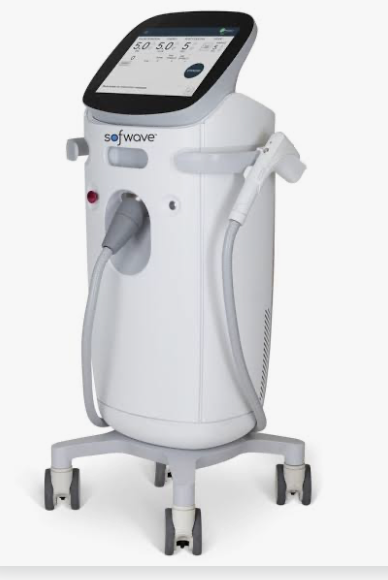
- Non-surgical skin tightening, using ultrasound-based technology like Sofwave to stimulate new collagen production in areas experiencing new laxity
- More targeted or increased dermal filler volume, as structural volume loss becomes more noticeable in the cheeks, temples, and jawline
- PDO thread lifts, which offer a modest, non-surgical lifting effect for patients with mild-to-moderate laxity who aren’t ready for surgery
- Continued or deeper laser resurfacing for texture, pigment, and pore concerns
- Neuromodulators for the neck, addressing vertical banding that can become more visible at this stage
Because this decade often involves the steepest rate of change for women specifically, providers frequently recommend more frequent monitoring and adjustment of a treatment plan compared to earlier decades.
In Your 60s: Rebuilding Structural Support
By your 60s, volume loss and skin laxity are usually the primary visible concerns, more so than fine lines alone. The underlying facial “scaffolding”, fat pads, collagen, and skin elasticity, has typically thinned enough that treatment approaches often shift toward restoring structure rather than just smoothing texture.
Non-surgical options commonly used at this stage include:
- Structural dermal filler placement, focused on restoring volume that supports overall facial contour rather than just filling individual lines
- Repeated or combined skin-tightening sessions, since collagen-stimulating treatments like Sofwave often require more sessions or maintenance to achieve visible results on more significantly aged skin
- Deeper fractional CO2 resurfacing, for patients wanting more noticeable improvement in texture and laxity, accepting a longer recovery in exchange for a more significant result
- Thread lifts, for patients seeking a lifting effect without surgery
It’s worth being direct here: non-surgical treatments remain genuinely effective for many people well into their 60s and beyond, but for more significant structural laxity, they have real limits. If your primary concern is substantial jowling or major neck laxity, a non-surgical treatment plan may improve things without fully resolving them, and a consultation is the only reliable way to know which category your specific concerns fall into.
A Word on Individual Variation
Everything above describes general tendencies, not fixed rules. Genetics, sun exposure history, smoking, weight fluctuation, and hormone status all affect how quickly any individual’s skin changes, which is precisely why the American Academy of Dermatology emphasizes that a good cosmetic treatment plan comes from an in-person evaluation with a board-certified provider, not a generic checklist based on age alone [6]. Two people in the same decade of life can have meaningfully different skin, and meaningfully different treatment plans as a result.
Frequently Asked Questions
Is there an “ideal” age to start non-surgical treatments?
Many providers recommend starting preventive treatments (like neuromodulators and good sun protection) in the late 30s or early 40s, but it’s genuinely never too late to start — effective options exist at every stage.
Do I need surgery eventually, no matter what?
Not necessarily. Many people maintain results with non-surgical treatments for years. Whether surgery becomes worth considering depends on your specific concerns, goals, and how your skin responds to non-surgical options over time — not on age alone.
How often do I need to repeat these treatments?
This varies significantly by treatment type and individual. Neuromodulators typically need repeating every 3-4 months; fillers can last 6-18 months depending on the product and area; skin-tightening results from a single session may last around a year. Your provider can give you a realistic maintenance schedule based on what you actually have done.
Can I combine treatments from different categories?
Yes — many treatment plans combine, for example, a skin-tightening treatment with filler or resurfacing. A consultation is the best way to determine what combination makes sense for your specific skin and goals.
This article is for general informational purposes and isn’t a substitute for personalized medical advice. Individual results and appropriate treatments vary significantly by person. Schedule a consultation with a licensed provider at Pearl Scott Health and Beauty to discuss what’s right for your skin.
References
- Fisher GJ, et al. “Osteoporosis, like skin ageing, is caused by collagen loss which is reversible.” PMC. https://pmc.ncbi.nlm.nih.gov/articles/PMC7160787/
- Sibilla S, et al., as reviewed in “Skin collagen through the lifestages: importance for skin health and beauty.” OAE Publishing. https://www.oaepublish.com/articles/2347-9264.2020.153
- Brincat M, et al. (1987), as reviewed in Calleja-Agius J, “Skin ageing.” University of Malta. https://www.um.edu.mt/library/oar/bitstream/123456789/6405/1/Jean%20Calleja-Agius%20-%20Skin%20ageing.pdf
- Shen X, et al. “Nonlinear dynamics of multi-omics profiles during human aging.” Nature Aging (2024), as reported by Stanford Medicine News. https://med.stanford.edu/news/all-news/2024/08/massive-biomolecular-shifts-occur-in-our-40s-and-60s–stanford-m.html
- GenomeWeb, “Landmark Stanford Molecular Aging Study Called into Question Over Data Analysis Methods.” https://www.genomeweb.com/node/656351
- American Academy of Dermatology, “Who should provide your cosmetic treatment.” https://www.aad.org/cosmetic/safety/who-should-provide